
Chiune Sugihara

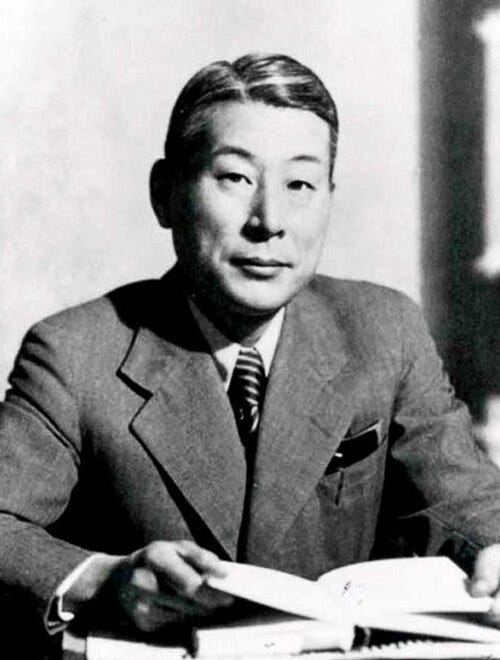
“In life, do what’s right because it’s right.” - Chiune Sugihara
Chiune Sugihara stood 5’5” tall, with a dignified presence; his hair was always neatly combed, a slight smile often graced his face, and he dressed in tailored, elegant suits. Yet what would become most memorable about him was his courage and unwavering resolve to help people in need.
Born on a frigid day on January 1, 1900, in the small town of Yaotsu, Japan, as a young boy, Chiune enjoyed fishing and playing baseball, a sport in its early years in America and in its infancy in Japan. His father was the local tax collector for the Emperor, and his mother came from a long Samurai lineage, an ancestry that Chiune deeply admired.
In school, Chiune was taught three core codes for Japanese society:
Do not be a burden to others
Take care of others
Do not expect rewards for your goodness
Chiune took these ideals to heart; they would stay with him for life and help him meet some of the hardest tests imaginable.
In 1940, Chiune, who had become a career diplomat for Japan, was serving as the Japanese consul in Kaunas, Lithuania. The country was amidst dramatic change. Jewish refugees were arriving in large numbers from German-occupied Poland, seeking temporary safety in still-independent Lithuania, one of the few places in Eastern Europe not yet under Nazi or Soviet control. But as Nazi power grew across the continent and fears of its eastward expansion mounted, a new threat emerged. In June 1940, before the Nazis could reach Lithuania, the Soviet Union occupied and a few months later annexed the country.
When the Soviet Union took control, it ordered the closing of all consulates except those of Japan and the Netherlands. Furthermore, the new regime imposed strict travel restrictions. Still deeply worried about the potential Nazi threat, Jewish people now desperately sought a way out before the borders would fully close.